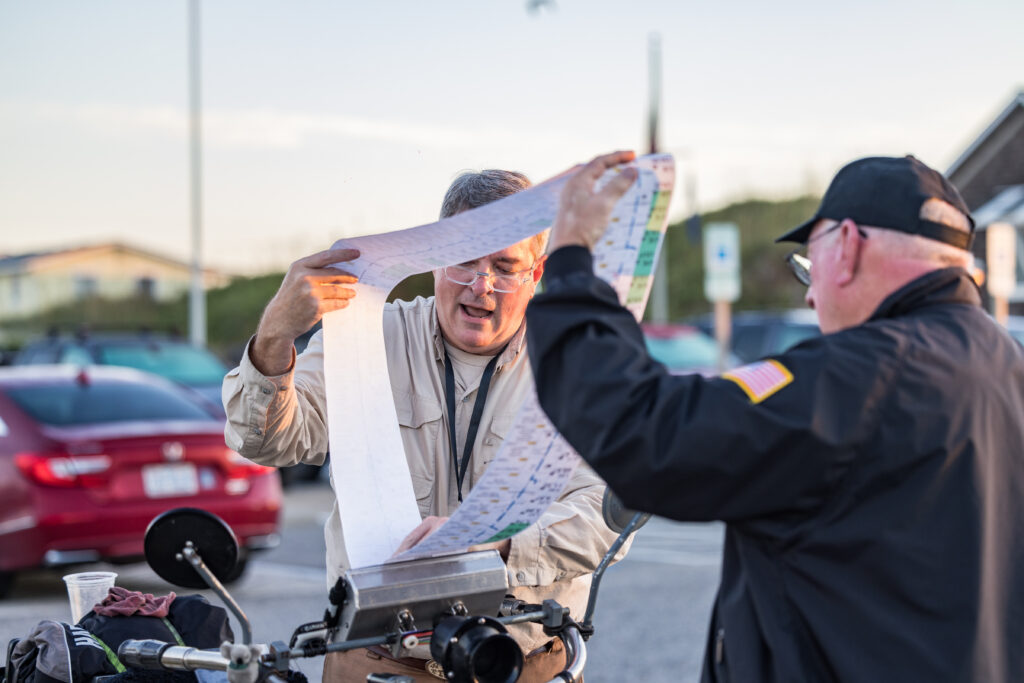
What does a typical day on the TransAm actually look like? The truth is there really isn’t a “typical” day, but there is a rhythm that riders fall into over the course of the event, a kind of routine that starts to feel familiar even though no two days ever end up being quite the same on the TransAmerican Motorcycle Endurance Run.
Early Mornings
Most riders are up early, and by early we mean really early, with alarms starting to go off somewhere around 5:00 to 5:30 in the morning as people slowly make their way down to the hotel lobby to grab coffee, eat whatever breakfast they can find, and begin mentally preparing for the day ahead.
It’s usually quiet at first, a little slow as everyone wakes up, but you can feel the energy building as riders start talking through the day, looking over their bikes, and getting into that mindset of knowing they have a full day of miles ahead of them. This is also when riders pick up their maps from the TransAm staff, taking the time to carefully mark fuel stops, note mileage, and think through how they want to approach the route, each rider manages their day a little differently.
Getting Ready to Ride
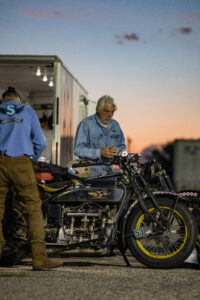
Once breakfast is done, everyone heads out to the parking lot where the real work begins, and even though most riders try to get as much done as possible the night before, mornings still take time because there is always something that needs one more look. Bolts get checked, oil gets looked over, chains get adjusted, and small details that might seem minor on a modern bike become incredibly important when you’re relying on a 100 year old machine to carry you across the country.
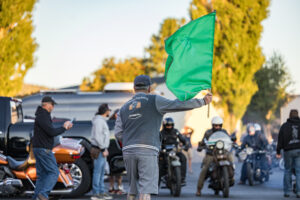
At the same time, riders are loading their maps into their roadbook holders, double-checking their route, and making sure everything is set before the day begins, because once you’re out on the road there’s no quick fix for forgetting something simple. There’s always a moment where everyone is just waiting, helmets on, bikes idling or about to be kicked to life. And then the green flag drops, and just like that, the day is underway.
On the Road
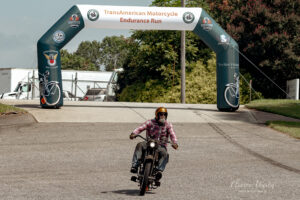
Once riders leave the start, the day can unfold in a hundred different ways depending on the weather, the terrain, the bike, and sometimes just pure luck. There are days where everything lines up perfectly, where the route is relatively flat, the weather cooperates, and the miles come easy, and for a little while you almost forget how challenging this event can be. But those days are never guaranteed. On one of our shortest and flattest days, something that should have been straightforward, we still saw two frame cracks, which is a perfect example of how quickly things can change and how even the “easy” days can turn into something else entirely.
In those moments, riders have to stop, assess the situation, and make a decision, whether that means fixing the issue on the side of the road, finding a way to limp the bike in, or deciding that the problem might be too serious to continue that day. Other days bring a completely different kind of challenge, like climbing 4,500 feet up to a pass over 10,000 feet, such as Wolf Creek Pass, where the combination of altitude and weather pushes both rider and machine to their limits.
Add in rain, and suddenly riders are dealing with carburetor issues, loss of power, and trying to keep magnetos covered while still riding up a mountain, which is not exactly something you can practice ahead of time. And then there are the moments in between, the ones that don’t always make it into the highlight reel, where riders might actually have time to stop, sit down somewhere interesting, and eat a real lunch, taking a break and soaking in where they are before getting back on the road.
Rolling Into Town
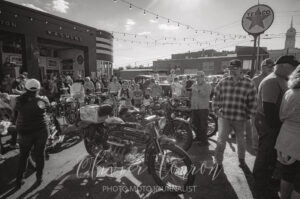
At the end of the day, riders roll into whatever stop has been planned, and they are greeted by people from the local community who have come out to see the bikes, ask questions, and be part of something they don’t get to see every day. For many of them, it’s the first time they’ve ever seen these machines up close, let alone heard them running, and there’s something special about watching that connection happen between the riders, the bikes, and the people who come out to welcome them.
It’s a chance to slow down a little, talk about the day, share stories, and appreciate the history that these motorcycles represent. After that, it’s time to grab some food, and then head back to the hotel.
The Work Continues
Back at the hotel, the day isn’t over yet, because the parking lot quickly turns into a working space where bikes are being checked over, tools are out, and riders are getting ready for whatever comes next. Some nights are simple, just routine maintenance that takes an hour or two, making sure everything is ready to go for the next morning. Other nights turn into long ones, with bigger repairs that can keep riders up until midnight or later, working under whatever light they can find to make sure the bike is ready to start again the next day. It’s all part of it.
Do It All Again
Eventually, the tools get put away, the bikes get parked, and riders head inside to get a few hours of sleep before it all starts over again. That’s a day on the TransAm, long, unpredictable, sometimes challenging, sometimes smooth, but always memorable in a way that’s hard to explain unless you’ve experienced it yourself.
Photos by: Olivier Touron, Ed Harriger, Eddie Phillips, Kazuo Matsumoto
Want to sign up for our email list? Do it here!
Sponsored by: Legends Motorcycles, Sinless Cycles, Competition Distributing, Veritas Vintage, Antique Motorcycle Club of America